
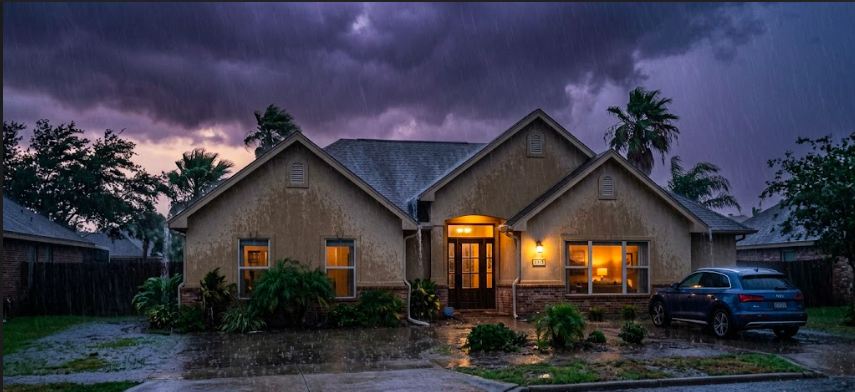
If you live in McAllen, TX, you know what “it just started raining” can really mean a wall of water descending on the Rio Grande Valley that overwhelms drainage systems and seeps into homes in minutes. After every major rain event, the real damage often hides where you can’t see it.
The March 2025 flooding that struck Hidalgo County was a reminder of just how fast conditions can deteriorate here. Streets submerged, homes took on water, and in the weeks that followed families discovered mold colonies behind drywall they thought was fine. That pattern repeats itself every time a heavy storm rolls through the Valley.
This guide gives McAllen homeowners a clear, step-by-step inspection framework to follow after any significant rain event. We’ll cover every area of your home, from the roof to the foundation, explain what warning signs actually mean, and tell you exactly when to call a professional.
Why McAllen Homes Are Especially Vulnerable to Rain Damage
McAllen’s subtropical climate is beautiful but it creates a perfect storm (literally) for water intrusion. A few local factors make every heavy rain event a higher-stakes situation than in drier regions:
Year-Round Humidity
- Average relative humidity above 70%
- Materials that get wet dry slower
- Mold colonizes in as little as 24–48 hours
- Condensation problems year-round
Intense, Fast Rain Events
- Flash floods with little warning
- “When it rains, it pours” literally
- Flat terrain slows water runoff
- Drainage systems quickly overwhelmed
Local Construction Styles
- Many older McAllen homes lack proper vapor barriers
- Slab foundations can develop cracks over time
- Stucco exteriors trap moisture inside walls
- Flat or low-pitch roofs common in the area
Geography & Flooding History
- Proximity to the Rio Grande and area drainage channels
- Multiple FEMA-designated flood zones
- Recurring tropical moisture from the Gulf
- March 2025: foot+ of rain in under 48 hours
Local Fact: The National Weather Service has documented repeated flash flood emergencies in Hidalgo County, with McAllen receiving over 4 inches of rain in single afternoon events. The city’s storm drainage infrastructure, while improving, was not built for these increasingly frequent extreme events.
Step-by-Step: What to Check After Heavy Rain in McAllen
Before you begin any inspection, ensure the storm has passed and it is safe to move around your property. Do not enter standing water that may contact electrical outlets or panels. Once it’s safe, work from the outside in, top to bottom.
Start With the Roof and Gutters
Your roof is your home’s first line of defense. After any heavy downpour, visually inspect from the ground if possible. Look for missing, curled, or displaced shingles, which can allow water to penetrate the decking and eventually your attic or ceiling below. Check that all downspouts are intact, properly connected, and directing water at least 4–6 feet away from your foundation.
Inside your attic (check within 12–24 hours of the storm), use a flashlight to look for water stains on rafters, wet insulation, and any daylight visible through the roofline. Even a small pinhole leak becomes a major mold problem in McAllen’s humidity. Our team provides expert roof leak repair and water damage mitigation in McAllen, TX when the damage goes beyond what you can handle alone.
Inspect Your Exterior Walls and Foundation
Walk the full perimeter of your home. Look for: soil that’s pooling rather than draining away from the house (the ground should slope down, away from your foundation); new cracks in stucco or brick; water staining at the base of exterior walls; and any efflorescence (white chalky deposits) that indicates water has been moving through masonry.
Pay special attention to window wells, basement window frames, and any areas where different materials meet expansion joints, where an addition connects to the original structure, and where pipes or utility lines enter the home. These transition zones are where water almost always finds a way in first.
Check All Interior Ceilings and Upper Walls
Water stains on ceilings are the most visible sign of roof or upstairs plumbing leaks, but they’re often misleading about where the actual entry point is water travels along joists and rafters before dripping. Look for yellowing, bubbling paint, or soft drywall. Press gently on any suspicious area; if it feels soft or spongy, you have active moisture damage that needs professional assessment.
Check interior walls along the perimeter of your home as well. Bubbling wallpaper, paint that’s peeling from the bottom up, or discoloration along baseboards all indicate that water is wicking up from the floor or in from outside.
Examine Your Floors All of Them
On tile or hard flooring, look for grout lines that appear darkened or stained, tiles that sound hollow when tapped (indicating the adhesive beneath has failed), and any warping at the seams where flooring meets walls. On hardwood, look for cupping (edges higher than center) or buckling both are signs of moisture absorption from below.
Carpet is particularly deceptive in McAllen’s climate. It may look and feel fine on top while the padding and subfloor beneath are saturated. Kneel down and press firmly if you feel moisture, or if the carpet shifts and water seeps up around your hand, you need water extraction immediately.
Inspect Your Garage, Utility Room, and Laundry Area
Garage floors often crack and allow groundwater to seep in during heavy rain events. Look for water lines on walls (these show the high-water mark of any intrusion), rust stains along the floor where metal garage door tracks sit, and dampness in corners where the wall meets the floor. Check the water heater platform and any shelving unit bases these areas hide moisture well.
In the laundry and utility room, check behind the washing machine and under the water heater for slow leaks that a heavy rain event can exacerbate by raising water pressure in the lines or the water table around your foundation.
Basement and Below-Grade Space Moisture: The Hidden Threat in McAllen Homes
While true basements are less common in South Texas than in northern states, many McAllen homes have below-grade areas, crawl spaces, sunken utility rooms, or converted storage areas at or below grade. After heavy rain, these are ground zero for moisture intrusion.
Important: If you have any standing water in a below-grade area of your home, do not enter it until you have confirmed the electrical panel and any outlets in that space are not energized or have been shut off. Call a professional immediately.
What to Look For in Crawl Spaces and Below-Grade Areas
- Standing water or visible soil saturation even a thin sheen of water is a red flag
- White or gray crystalline deposits (efflorescence) on concrete walls, indicating water has been migrating through
- Rusted metal components support beams, HVAC brackets, pipe fittings which show prolonged moisture exposure
- Deteriorating wood: soft, discolored, or visibly rotting joists or sill plates are a structural concern
- Musty or earthy odor one of the earliest indicators of active mold growth
- Condensation on pipes, ducts, or walls, even when no rain is visibly entering
- Insulation that is sagging, stained, or pulling away from the subfloor above
- Any pest activity increase moisture draws insects and rodents that follow the same entry paths as water
If your home has a sump pump, test it by pouring water into the pit to confirm it activates. A failed sump pump during a rain event is a common cause of significant flooding damage that could have been avoided with a simple pre-storm check.
“In McAllen’s climate, moisture in a crawl space or below-grade area doesn’t just stay there it migrates up through flooring and walls, feeding mold colonies that can spread throughout your entire home within weeks.”
For homes where below-grade moisture intrusion is identified, our flooded basement cleanup service in McAllen, TX includes full water extraction, structural drying, and post-remediation verification testing to ensure your space is fully dry before any repairs begin.
Mold After Heavy Rain in McAllen: Warning Signs and What to Do
Mold is the consequence that most McAllen homeowners fear and for good reason. The combination of warm temperatures, high humidity, and organic building materials creates nearly ideal growing conditions. After a rain event that introduces moisture to hidden spaces, mold can establish and spread in as little as 24 to 48 hours.
Early Warning Signs of Post-Rain Mold Growth
Visual Signs
- Black, green, gray, or white fuzzy growth on walls, ceilings, or floors
- Discoloration that appears after a rain event and doesn’t wipe away
- Staining behind or under furniture moved after flooding
- Grout lines in bathrooms turning dark between deep cleanings
Smell and Feel Signs
- Persistent musty or earthy odor, especially in certain rooms
- Smell that’s strongest in the morning when the house has been closed
- Air that feels damp or heavy in specific areas
- HVAC system spreading a stale smell throughout the home
Health Symptoms
- Unexplained increase in allergy symptoms or respiratory irritation
- Headaches that improve when you leave the home
- Persistent coughing or sneezing with no other clear cause
- Skin irritation or eye redness noticed by multiple household members
Hidden Location Clues
- Wallpaper or paint bubbling from the bottom of a wall up
- Baseboards that feel soft when pressed
- Floors that squeak in new places after a rain event
- HVAC vents that show any dark staining around the edges
Why DIY Mold Removal Often Makes Things Worse
Bleaching visible mold is the instinct most homeowners have and it’s understandable. But surface treatment of mold does not address the root cause (moisture), does not reach mold inside wall cavities or under flooring, and can actually aerosolize spores if done without proper containment, spreading the problem to areas of your home that weren’t yet affected.
Professional mold remediation in McAllen requires containment barriers, negative air pressure machines with HEPA filtration, removal of affected materials, treatment with EPA-registered antimicrobials, and verification testing after the work is complete. The EPA’s guidance on mold in buildings makes clear that any mold growth exceeding 10 square feet should be handled by a trained professional and even smaller patches require proper containment if located in HVAC-connected areas.
McAllen-Specific Note: Hidalgo County health regulations require professional remediation documentation when mold is identified in residential properties that are being sold or leased. If you’re a homeowner planning to list your property, undisclosed mold damage discovered post-sale is a significant liability. Document everything and remediate properly.
Related Services for McAllen Homeowners After Heavy Rain
At FloodFix Solutions, we offer a full spectrum of restoration services tailored to the specific challenges of the Rio Grande Valley climate. After a heavy rain event, the following services are most commonly needed:
Flood Damage Cleanup
Storm Damage Repair
Mold Remediation
When to Stop Inspecting and Call a Professional Immediately
Some situations require expert intervention not because homeowners aren’t capable, but because the risks (structural, electrical, biological) are too high and the equipment required simply isn’t available to the average homeowner. Call FloodFix Solutions at (956) 474-9668 right away if you encounter any of the following:
- Any standing water inside the home, even just an inch or two
- Water near your electrical panel, outlets, or appliances
- Visible mold growth larger than a small dinner plate (10 sq. ft. or more)
- A strong sewage or rotten-egg smell, which may indicate a sewage backup from overwhelmed municipal lines
- Soft, sagging, or visibly bowed ceilings that could indicate significant water pooling above
- Any water intrusion that you cannot identify the source of
- Flooding that entered through a drain or toilet this may involve contaminated Category 3 “blackwater” that requires biohazard protocols
- HVAC system that has been submerged or had water contact do not run it until inspected
Time Matters: Water damage that sits for 24 hours can double or triple restoration costs compared to water that is extracted and dried within the first few hours. In McAllen’s climate, mold becomes visible within 48–72 hours in wet conditions. Every hour of delay has a real financial cost.
We Serve These McAllen-Area Neighborhoods
FloodFix Solutions provides 24/7 emergency water damage restoration across McAllen and the surrounding Rio Grande Valley communities. If you’re in any of these areas after a heavy rain event, we can typically reach you within 30–60 minutes:
Trenton Village / Trenton Park
We also serve Mission, Edinburg, Pharr, Alton, Palmhurst, and Sharyland. View the full list of service areas →
Rain Season Prep: 7 Things McAllen Homeowners Should Do Before the Next Storm
The best time to protect your home is before the next heavy rain event. These are the most impactful steps McAllen homeowners can take to reduce their flood risk and minimize post-storm damage:
Clean and Extend Your Gutters and Downspouts
Clogged gutters overflow and drive water toward your foundation. Add downspout extensions to carry water at least 4–6 feet away from the home, and consider splash blocks at the base.
Grade Your Landscaping Away from the Foundation
The ground around your home should slope downward at roughly 1 inch per foot for the first 6 feet. This single factor prevents enormous amounts of water from pooling against your foundation.
Seal Foundation Cracks and Window Wells
Use hydraulic cement or polyurethane sealant on visible cracks in your foundation or exterior walls. Add covers to window wells to prevent them from filling with stormwater.
Install or Test a Sump Pump
For homes with below-grade spaces or known moisture issues, a sump pump with a battery backup is one of the most cost-effective protections available. Test yours every spring and fall.
Check Your Roof Before Storm Season
Have your roof professionally inspected every 2–3 years in McAllen’s climate, or after any major hailstorm. Identifying and sealing small issues costs far less than repairing the water damage they cause.
Know Your Flood Zone and Insurance Coverage
Check your FEMA flood map status for your McAllen address. If you’re in a flood zone and don’t carry separate flood insurance, a single rain event like March 2025 could mean tens of thousands of dollars in uninsured losses. Standard homeowners insurance does not cover flood damage.
Keep FloodFix Solutions’ Number Saved
In an emergency, you don’t want to be searching for a trusted restoration company. Save (956) 474-9668 in your phone now. We’re available 24/7 and typically on-site within 30–60 minutes anywhere in the McAllen metro area.
Related Articles for McAllen Homeowners
Want to go deeper on specific water damage topics in the Rio Grande Valley? These guides from FloodFix Solutions cover situations that commonly follow heavy rain events in McAllen:
- Storm & Hurricane Flood Damage Restoration in McAllen TX: What Rio Grande Valley Homeowners Need to Know
- Water Damage Restoration in McAllen TX: What Does a Professional Company Actually Do?
- Sewage Backup Cleanup in McAllen TX 78503: Health Risks and the Professional Process
Water Damage After Heavy Rain? Don’t Wait.
Every hour of delay means more moisture penetrating deeper into your walls, floors, and structure and higher remediation costs. FloodFix Solutions is standing by 24/7 for McAllen homeowners.📞 (956) 474-9668 Get Your Free Assessment →
Leave a Reply