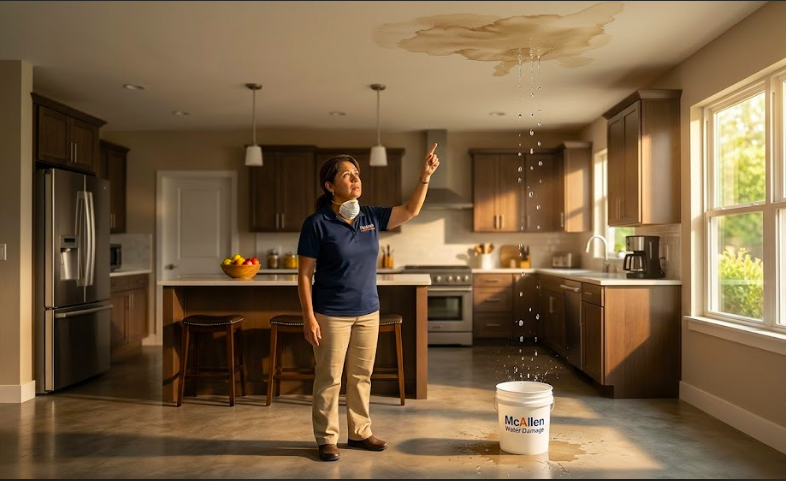
Water leaks in a McAllen home can spiral from a minor inconvenience into thousands of dollars of structural damage and hazardous mold often within 24 to 48 hours. This guide arms you with the professional-grade restoration steps every McAllen homeowner should know, plus the local resources you need when a DIY fix isn’t enough.
Table of Contents
- Common Causes of Water Leaks in McAllen Homes
- Warning Signs You Shouldn’t Ignore
- Immediate Steps After a Water Leak
- Drying & Moisture Control Best Practices
- Preventing Mold After a Water Leak
- Long-Term Prevention Tips
- Our Related Restoration Services
- Service Areas Near McAllen
Common Causes of Water Leaks in McAllen Homes
McAllen’s hot, humid climate creates unique pressures on residential plumbing and building materials. Understanding the most frequent culprits helps you catch problems before they become catastrophic.
Aging Pipe Joints
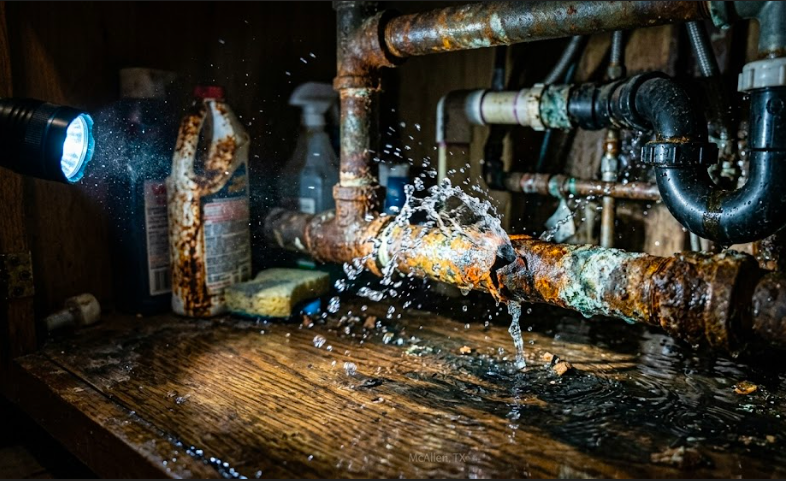
Older homes with galvanized or PVC piping develop corroded or loose fittings that slowly drip inside walls, often going unnoticed for months.
Thermal Expansion
Extreme summer temperatures cause pipes to expand and contract repeatedly, stressing solder points and eventually creating pinhole leaks.
Faulty Appliances
Water heaters, washing machines, and dishwashers with deteriorated supply hoses are among the top sources of sudden, high-volume leaks.
Roof & Window Intrusion
Heavy Rio Grande Valley storms drive rainwater through compromised roof flashing, cracked caulking around windows, and clogged gutters.
Warning Signs You Shouldn’t Ignore
Detecting a water leak early is the single most effective way to limit restoration costs. Train yourself to watch for these red flags throughout your home:
Running water sounds when all fixtures are off — audible flow inside walls is a near-certain sign of an active pipe leak.
Unexplained spike in your water bill — a sudden 20–30% increase with no change in usage is a classic hidden-leak indicator.
Musty or damp odors — especially in closets, under sinks, or near exterior walls where pipes run.
Discolored ceiling or wall stains — yellow or brown rings signal water that has soaked into drywall over time.
Warped flooring or bubbling paint — moisture migrating behind finished surfaces distorts materials noticeably.
Full-Service Water Damage Restoration in McAllen, TX
From emergency water extraction to complete structural drying and mold remediation our McAllen team is available 24/7 to restore your home fast .Visit Our Homepage →
Immediate Steps After a Water Leak
The first 60 minutes after discovering a water leak are the most critical. Follow these steps in order to minimize damage and set the stage for a successful restoration:
Shut Off the Main Water Supply
Locate your home’s main shutoff valve typically near the meter at the street or at the point where the main line enters your home. Turn it fully clockwise to stop water flow immediately. This alone can prevent hundreds of additional gallons of damage.
Cut Power to Affected Areas
If water is near electrical outlets, panels, or appliances, switch off the relevant circuit breakers before stepping into the area. Never step into standing water without first verifying the electricity is off.
Remove Standing Water Quickly
Use towels, mops, or a wet/dry vacuum to extract as much surface water as possible. The faster you remove standing water, the less saturated your flooring, subflooring, and wall cavities will become.
Document Everything for Insurance
Photograph and video the damage before moving furniture or beginning cleanup. Capture wide shots, close-ups of the leak source, and any discoloration or structural damage. This documentation is essential for a smooth insurance claim.
Call a Certified Water Restoration Professional
DIY cleanup almost always leaves residual moisture behind walls and under floors that you cannot detect without professional moisture meters. Residual moisture is the primary driver of mold growth. Contact a certified restoration team as soon as the immediate emergency is stabilized.
Drying & Moisture Control Best Practices
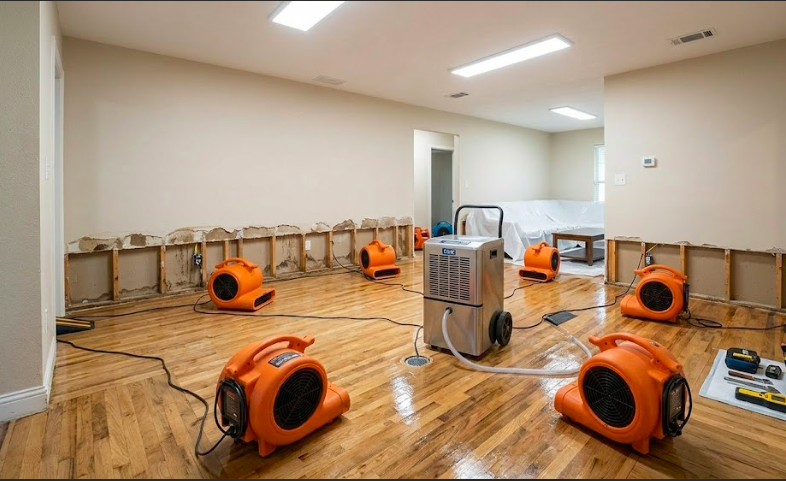
Effective drying is not simply “opening windows and waiting.” Professional-grade structural drying involves a precise combination of equipment, airflow management, and monitoring to reach safe moisture levels throughout all affected materials.
Equipment That Makes the Difference
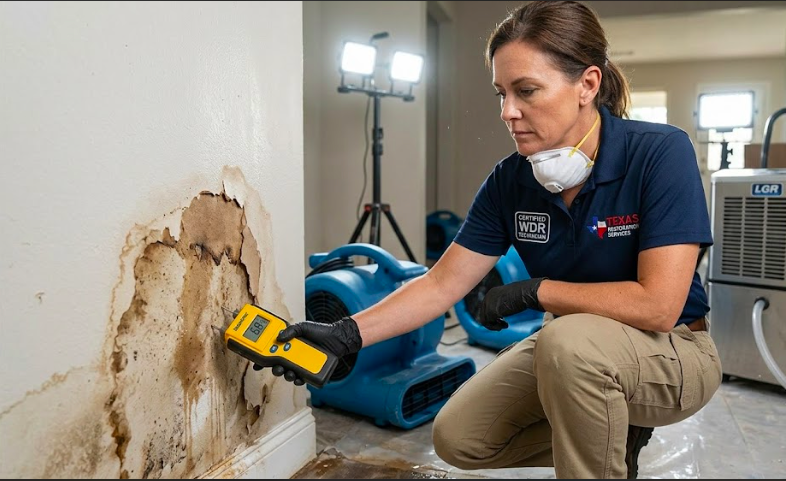
Industrial air movers create a high-velocity airflow across wet surfaces, dramatically accelerating evaporation from carpet, hardwood, and drywall. They work most effectively when paired with commercial-grade dehumidifiers that actively pull evaporated moisture out of the air preventing it from simply re-depositing on cooler surfaces nearby.
In McAllen’s climate, a restoration contractor will typically monitor ambient relative humidity (targeting below 50%) and use calibrated moisture meters to track drying progress inside wall cavities, under flooring, and in ceiling assemblies areas invisible to the naked eye.
How Long Does Drying Take?
Most residential water damage situations require 3 to 5 days of continuous drying under proper equipment. More severe cases particularly those involving Category 2 or Category 3 water (gray or black water) can require longer, along with antimicrobial treatments. Cutting the drying process short is the most common cause of secondary mold claims.
Preventing Mold After a Water Leak
Mold spores are present in every home. They only need three things to colonize: moisture, a food source (drywall, wood, carpet), and time. Remove the moisture quickly enough and mold never gets established.
Ventilate Aggressively
Run fans and open interior doors to maximize air circulation through affected spaces but keep exterior doors closed if outdoor humidity is high.
Maintain AC Temperature
Keep your air conditioning running at 68–72°F. Lower temperatures reduce the air’s moisture-holding capacity, aiding dehumidification.
Apply Antimicrobial Treatment
Professional antimicrobial sprays applied to exposed structural materials after drying provide a critical layer of protection against late-stage mold growth.
Schedule a Mold Inspection
Even after visible drying, schedule a professional inspection 7–10 days later to confirm no hidden mold growth has occurred inside wall cavities.
IICRC Standard Reminder
According to IICRC S520 standards, any material with confirmed mold growth that cannot be properly cleaned must be removed and replaced not encapsulated or painted over. Insist on proper remediation protocols to protect your family’s health.
Authoritative Resource
EPA: Mold Cleanup in Your Home
The U.S. Environmental Protection Agency provides detailed, science-based guidance on understanding mold health risks, when to hire a professional, and how remediation should be conducted safely in residential properties.Read the EPA’s Official Mold Cleanup Guide →
Long-Term Prevention Tips for McAllen Homeowners
The best restoration is the one you never need. These preventive measures are especially important given McAllen’s climate, aging housing stock, and hard water conditions:
- Install a whole-home water leak detector — smart sensors placed at water heaters, under sinks, and near washing machines send instant smartphone alerts at the first sign of moisture.
- Inspect hoses on appliances annually — replace braided supply hoses on washing machines and dishwashers every 5 years regardless of appearance.
- Flush your water heater annually — sediment buildup from McAllen’s hard water accelerates tank corrosion and can cause sudden failures.
- Clean gutters every fall and spring — clogged gutters overflow against your foundation and fascia boards, driving water intrusion at the roofline.
- Check caulking around tubs, showers, and windows annually — replace any cracked or shrinking caulk immediately to prevent slow water infiltration behind tile and walls.
- Know where your main shutoff is — every adult in your household should be able to locate and operate the main water valve without hesitation in an emergency.
Our Related Restoration Services
When a water leak exceeds DIY capabilities, our McAllen team delivers certified, end-to-end restoration. The two services most directly tied to water leak events are:
Emergency Water Extraction
Rapid response within 60 minutes of your call. Our truck-mounted extraction units remove standing water from any floor, carpet, hardwood, or subfloor surface, stopping the spread of damage before structural saturation sets in. Available 24 hours a day, 7 days a week throughout McAllen and the Rio Grande Valley .Learn About Emergency Water Extraction →
Mold Remediation Services
Certified mold remediation following IICRC S520 standards. We perform containment, HEPA air filtration, safe removal of contaminated materials, antimicrobial treatment, and post-remediation verification testing ensuring your home is genuinely mold-free, not just visually clean.Learn About Mold Remediation
Service Areas Near McAllen
Beyond McAllen city limits, our certified restoration crews serve homeowners throughout Hidalgo County and the greater Rio Grande Valley. Two key nearby communities we serve:
Palmhurst, TX
Water leak restoration, structural drying, and mold remediation for Edinburg homeowners with the same 24/7 rapid-response service available in McAllen.Water Damage Restoration in Palmhurst →
Central McAllen, TX
Serving Mission residents with fast emergency water extraction and full restoration services, including appliance leak cleanup and mold prevention treatment.Water Damage Restoration in Central McAllen →
Dealing With a Water Leak Right Now?
Don’t wait every minute of delay increases damage and mold risk. Our McAllen restoration team is standing by 24/7 to respond, extract, and restore your home fast.Get Emergency Help — Visit Our Homepage
Leave a Reply